
Context Mesh
One view of your entire business.
Your data lives in dozens of places. Your business rules live in people's heads. Getting the full picture means asking five people and reconciling three spreadsheets.
Context Mesh brings it all together through two core capabilities.
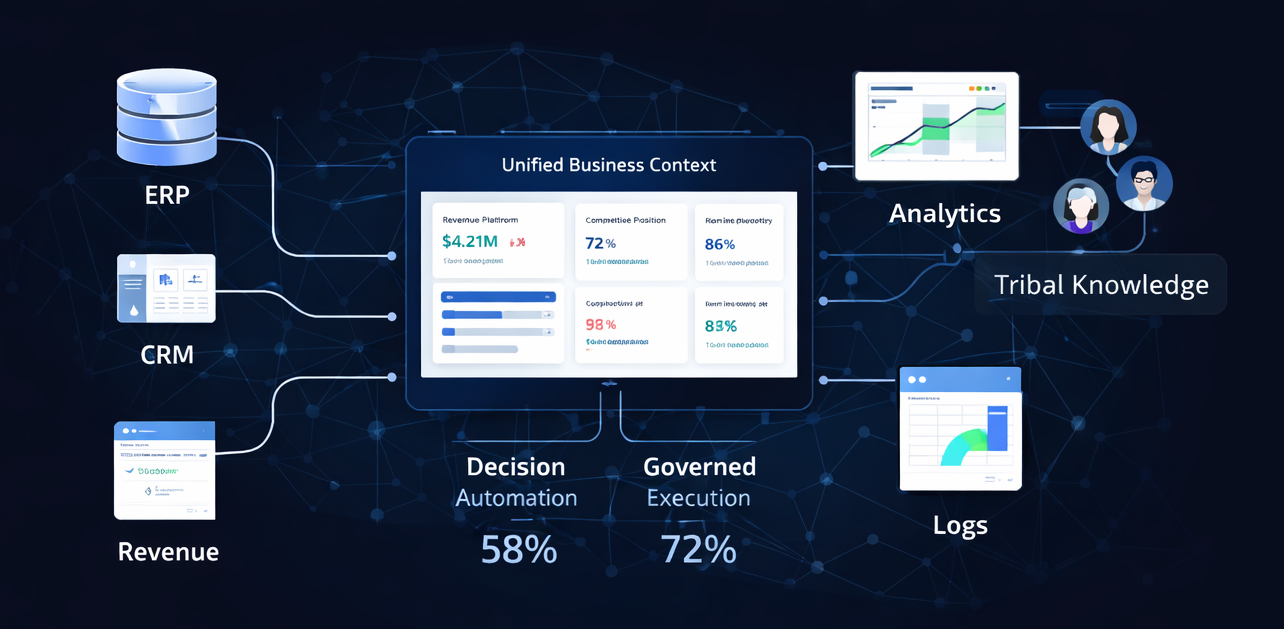
Two Core Concepts
Business Playbooks
The logic of your business — captured and executable
Your governance rules. Your approval workflows. Your pricing logic. Your exception handling. Everything that defines how your organisation operates — documented, version-controlled, and actually used by the system.
Context Decorator
Connect any system — even the difficult ones
Your ERP. Your CRM. Your legacy billing system from 2005. Every system in your organisation becomes queryable, regardless of how old it is or how poor its interfaces are.
Business Playbooks
Your rules. Your way. Actually enforced.
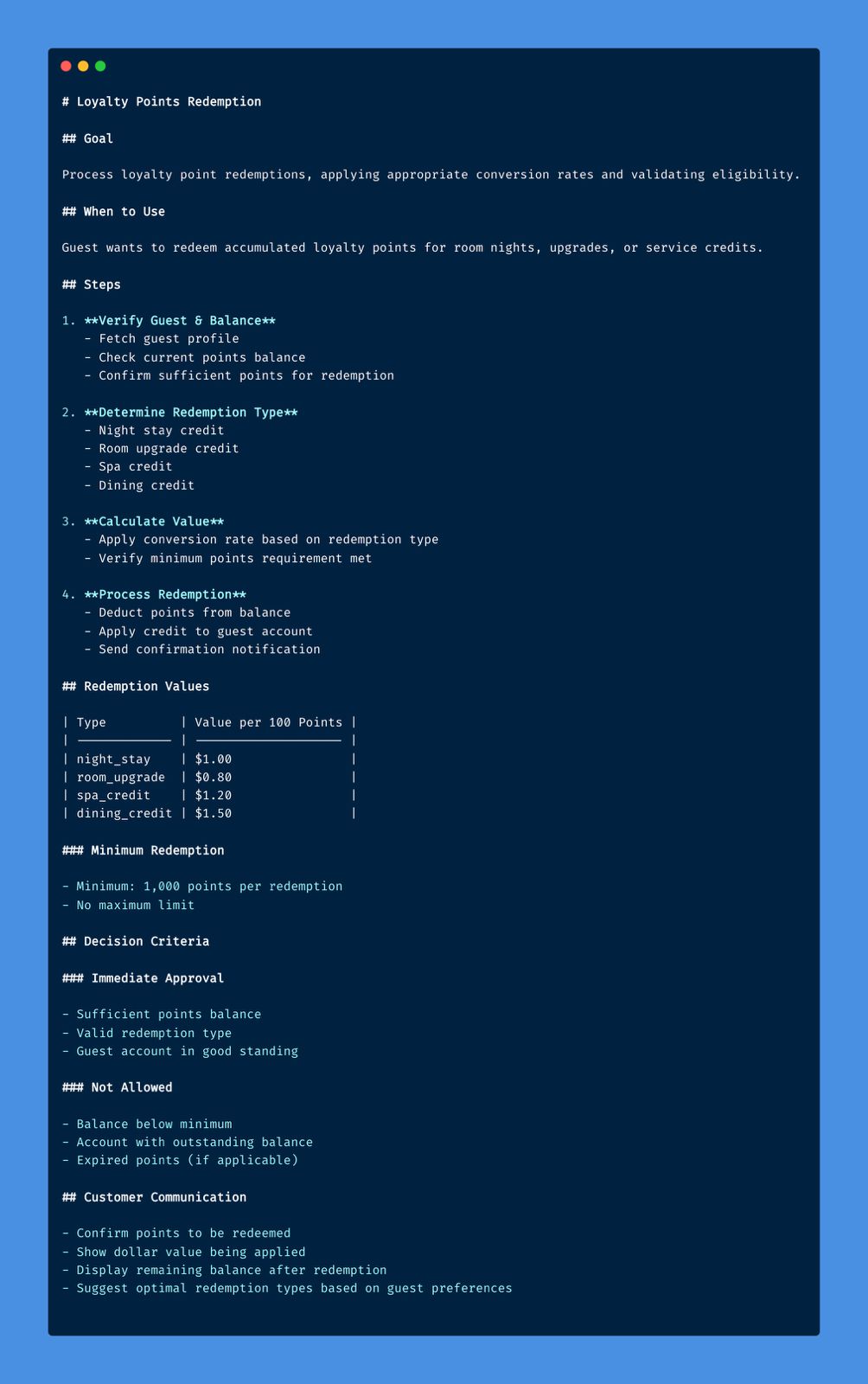
Every organisation has rules — pricing policies, approval thresholds, escalation procedures, compliance requirements. Usually they exist in policy documents nobody reads, or in the heads of your senior people.
Business Playbooks make these rules explicit and executable:
What Gets Captured
- Governance rules — Who can approve what, up to what amount, under what conditions
- Business logic — How pricing works, how discounts get calculated, how exceptions are handled
- Compliance requirements — What must be documented, what needs sign-off, what triggers review
- Operational procedures — How customer issues get escalated, how orders get fulfilled, how credits get applied
Why It Matters
Consistency — The same situation gets handled the same way, every time. No more "it depends who you ask."
Transparency — Executives can see exactly how the business operates. Not a policy manual — the actual rules the system follows.
Continuity — When people leave, the knowledge stays. New team members see how things actually work.
Auditability — Every decision has a trail. You can explain why something happened.
Context Decorator
Every system. One interface.
Your organisation runs on dozens of systems. Some modern, some legacy. Some with good APIs, some with none. Getting a complete picture usually means manual exports and spreadsheet gymnastics.
Context Decorator creates a unified layer over all your systems:
What It Connects
- Modern systems — ERP, CRM, finance platforms with standard interfaces
- Legacy systems — That billing system nobody wants to touch, but everyone depends on
- Data warehouses — Your historical data, accessible in real-time
- Documents and files — Contracts, policies, spreadsheets that contain critical information
- External sources — Market data, supplier information, industry benchmarks
How It Works
You don't need to replace anything. Context Decorator works with what you have:
- Systems with APIs get connected through them
- Systems without APIs get bridged through other methods
- Data gets normalised and reconciled across sources
- The result: one unified view, regardless of the mess underneath
The Result
Ask questions that span your entire organisation:
"What's our total exposure to this customer — across all business units, all contracts, all outstanding invoices?"
One question. One answer. From everywhere.
How They Work Together
Context Decorator connects your systems. Business Playbooks define how decisions get made.
Together, they enable questions like:
"Show me all customers who qualify for our premium pricing tier based on this quarter's volume."
The Context Decorator pulls data from sales, finance, and fulfilment systems. The Business Playbook defines what "qualifies for premium pricing" actually means. The answer is accurate, consistent, and auditable.
Business Impact
Faster decisions — Questions that took days now take seconds.
Consistent execution — Same situation, same outcome, every time.
Preserved knowledge — Your business logic survives personnel changes.
Complete visibility — Finally see across the whole organisation.
Audit-ready — Every decision documented and traceable.
Getting Started
Most organisations start with one of two approaches:
Start with a question — Pick something that currently takes too long to answer. "What's our real margin by customer?" or "Where are we exposed to risk?" Context Decorator makes the data accessible.
Start with a process — Pick something that's inconsistent or undocumented. Pricing approvals. Customer escalations. Credit decisions. Business Playbooks make the rules explicit.
Either way, you end up with both: unified data and captured knowledge.
See how organisations build custom use-cases with Business Playbooks and Context Decorator →
Related Capabilities
- Decision Engine — Playbooks become executable through the Decision Engine
- Collaboration Canvas — Teams collaborate around shared context